Pilates for Lower Back Pain: What Helps and What to Avoid
· By Bruna Felix Costa
Lower back discomfort is one of the most common reasons people walk into a Pilates studio. Long days at a desk, hours in the car, lifting kids, gardening and simply getting older can all leave the lower back feeling tight, tired or sore. Many people hear that Pilates can help and want to know whether it is right for them.
This article explains why Pilates is often recommended for people with everyday back stiffness, which kinds of exercises tend to feel good, which movements deserve caution, and how to start in a way that respects your body. It is general information, not medical advice. Back pain has many causes, and some need medical care, so talk to your doctor before starting any new exercise program for back pain.
First, when to see a doctor
Before any exercise, it is worth knowing when back pain needs a medical opinion. See a doctor if your pain followed a fall or accident, if it is severe or getting worse, if it spreads down the leg with numbness, tingling or weakness, if you notice changes in bladder or bowel control, or if it comes with fever or unexplained weight loss.
Even with ordinary stiffness, it is a good idea to check with your doctor or physical therapist before you start Pilates and to bring their guidance to your instructor. A Pilates instructor is not a substitute for medical diagnosis or treatment. The best results usually come when Pilates fits into the plan your medical team recommends.
Why Pilates is often suggested for back stiffness
Pilates focuses on controlled movement, breathing and the deep muscles that support the spine and pelvis. Many people with a sore lower back have fallen into patterns like gripping, bracing or avoiding movement altogether. Pilates teaches the body to move again with control, a little at a time.
Research on exercise for chronic low back pain generally supports staying active, and some studies have looked at Pilates specifically with encouraging results. Findings vary, and no exercise method works the same for everyone. What Pilates offers is a structured, adaptable way to move, which can be a good fit for people who feel unsure about exercise.
What tends to help
Breathing with the movement. Learning to breathe fully, into the back and sides of the ribs, helps many people release tension they did not know they were holding.
Finding a neutral pelvis and spine. Many exercises start with simply lying on your back, noticing the natural curve of the lower back and learning to keep it steady while the arms or legs move. That simple skill carries over into daily life.
Gentle spinal mobility. Small movements like pelvic curls, where you peel the spine off the mat one segment at a time, and gentle side bends can help a stiff back feel more mobile.
Hip and leg work. Tight hips and weak glutes often show up as lower back discomfort. Footwork on the Reformer and supported leg work on the Cadillac strengthen the legs while the spine stays supported.
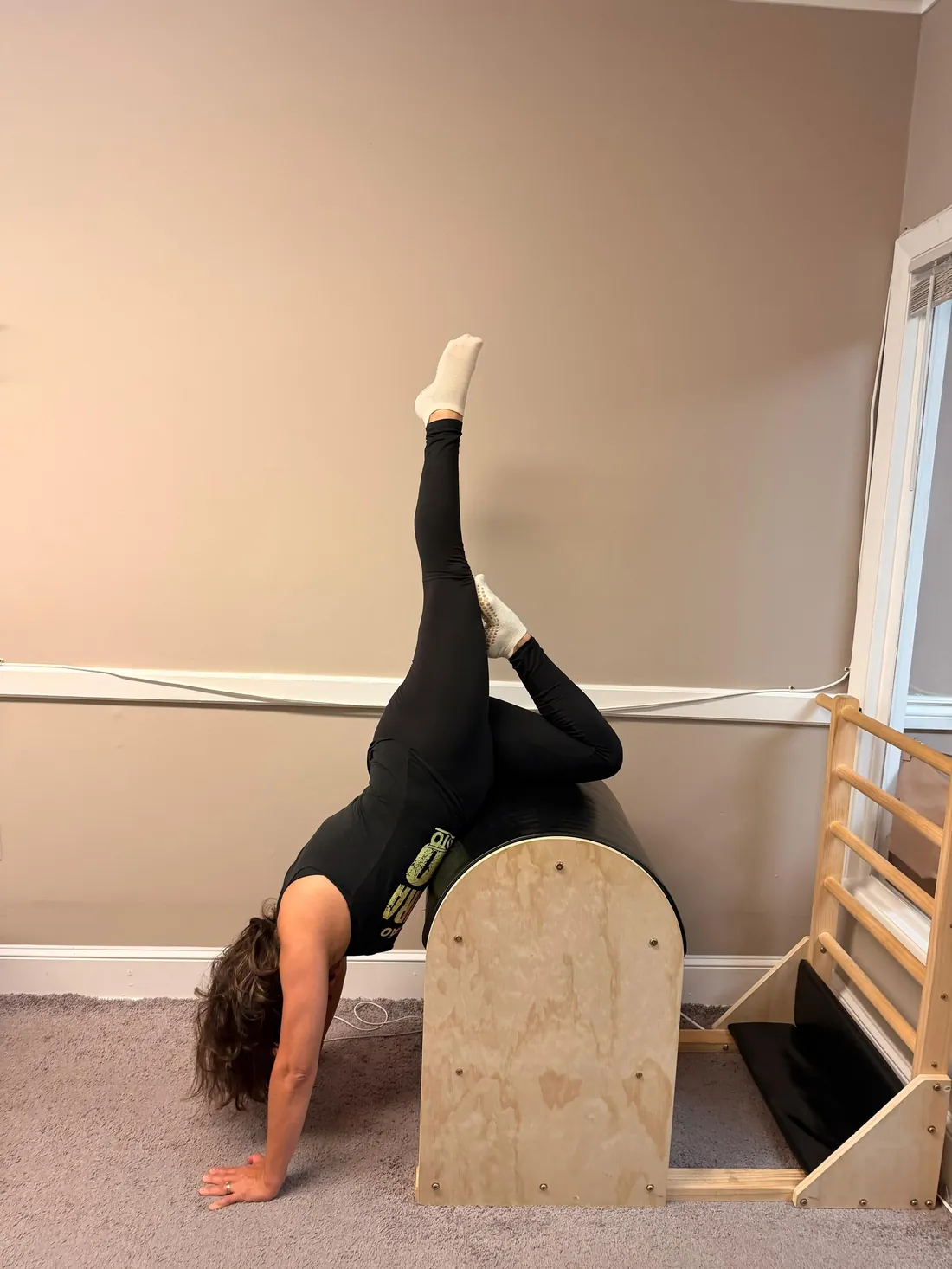
Supported stretching. The Ladder Barrel and the Cadillac allow stretches for the hips, hamstrings and spine with support, so you can relax into them rather than strain.
What to be careful with
Deep forward bending under load, like rolling up quickly from lying down or reaching for the toes with a rounded back, can bother some sensitive backs. These exercises can be modified or left out until your body is ready.
Big twists and deep backbends deserve caution too, especially early on. Some people find them helpful, others find they aggravate symptoms. Your instructor should start small and watch how you respond.
Holding your breath and over gripping the abdominals are common mistakes. A strong center in Pilates is not about sucking in as hard as possible. It is about steady, balanced support that still lets you breathe.
Pushing through pain. Mild effort and a sense of muscles working are normal. Sharp, shooting or increasing pain is a signal to stop and adjust. Tell your instructor, and if it continues, talk to your doctor.
Why private sessions make sense for back pain
In a group class, the instructor has to keep everyone moving through the same sequence. With back discomfort, you need the opposite: someone watching how your body responds to each exercise and adjusting springs, range and position in real time.
That is where private Pilates helps. Your instructor can choose exercises that feel good for your back, skip the ones that do not, and build a gentle progression over the weeks. The springs on the Reformer and Cadillac can support you so you can move with less strain.
Once you feel more confident, small group work can be a good addition. Our Mat Pilates classes are limited to five people, which helps the instructor keep an eye on everyone.
Simple habits between sessions
What you do between sessions matters as much as the sessions themselves. Short walks break up long periods of sitting. Getting up from your desk every half hour or so helps. Many people like a short routine at home, such as a few pelvic curls, gentle knee rocks and breathing exercises your instructor has shown you.
Sleep, stress and overall activity also influence how the back feels. Pilates is one useful tool, not a cure. Combined with good habits and your doctor's guidance, it can help many people feel more comfortable and confident moving again.
Starting Pilates for back discomfort in Lowell or Chelmsford
If you are dealing with everyday back stiffness and your doctor has said exercise is fine, a private session is a calm way to begin. We start with a conversation about your history and goals, then build the session around what your back can do today.
We teach at our studio in downtown Lowell and at our Chelmsford studio. See how to book a first session on our new clients page, or read what to expect at your first private Pilates session.
Frequently asked questions
- Is Pilates good for lower back pain?
- Many people with everyday back stiffness find Pilates helpful, and some research is encouraging. Results vary and back pain has many causes, so talk to your doctor first and start with an instructor who can adapt each exercise.
- Which Pilates exercises should I avoid with back pain?
- It depends on your body, but many people start carefully with deep forward bends under load, big twists and deep backbends. A good instructor will modify or skip anything that aggravates your symptoms.
- Should I do Pilates when my back hurts?
- If pain is severe, new after an injury or comes with numbness or weakness, see a doctor before exercising. For mild, familiar stiffness, gentle and supported movement often feels better than rest, but follow your doctor’s advice.
- Is reformer or mat Pilates better for back pain?
- Many people start on the Reformer or Cadillac because the springs can support the body and make exercises easier to adapt. Mat work can come later as strength and confidence grow.
Found this helpful? Make us a preferred source on Google.
Ready to book your session?
Private, duet and mat Pilates by appointment in Lowell and Chelmsford, MA. We reply personally.