
Pilates After Pregnancy: A Gentle Guide to Postnatal Pilates
· By Bruna Felix Costa
Your body does remarkable work during pregnancy and birth, and recovery takes time. Many new mothers want to feel strong and connected to their body again, but they are not sure when to start exercising or what is safe. Postnatal Pilates is one gentle option many women choose once they have been cleared by their doctor or midwife.
This guide explains when people usually return to Pilates after pregnancy, what postnatal Pilates tends to focus on, what to be careful with, and how private sessions can make the return feel calmer. It is general information, not medical advice. Every pregnancy and recovery is different, so always follow your own healthcare provider's guidance.
When can you start Pilates after having a baby?
There is no single answer. Many healthcare providers check in around six weeks after birth and may clear gentle exercise then, while recovery after a cesarean birth or a complicated delivery often takes longer. Some women are encouraged to begin simple breathing and pelvic floor exercises earlier. Your doctor or midwife is the right person to tell you when and how to start.
Ask specifically about returning to exercise, and mention any symptoms you have noticed, such as leaking, heaviness in the pelvis, pain, or a visible gap or doming along the middle of the belly. These are common after pregnancy, and your provider may suggest seeing a pelvic floor physical therapist before or alongside Pilates.
What postnatal Pilates focuses on
Breathing. Pregnancy changes how the ribs, diaphragm and abdominals work together. Postnatal Pilates often begins with simple breathing that expands the ribs and gently connects the breath with the deep abdominal and pelvic floor muscles.
Reconnecting the deep core. Rather than crunches, early postnatal work focuses on gentle activation of the deep abdominals and the pelvic floor, with lots of attention to how the belly responds.
Posture. Feeding, carrying and rocking a baby keep the shoulders rounded and the upper back working hard. Exercises that open the chest and strengthen the upper back and shoulder blades often feel very welcome.
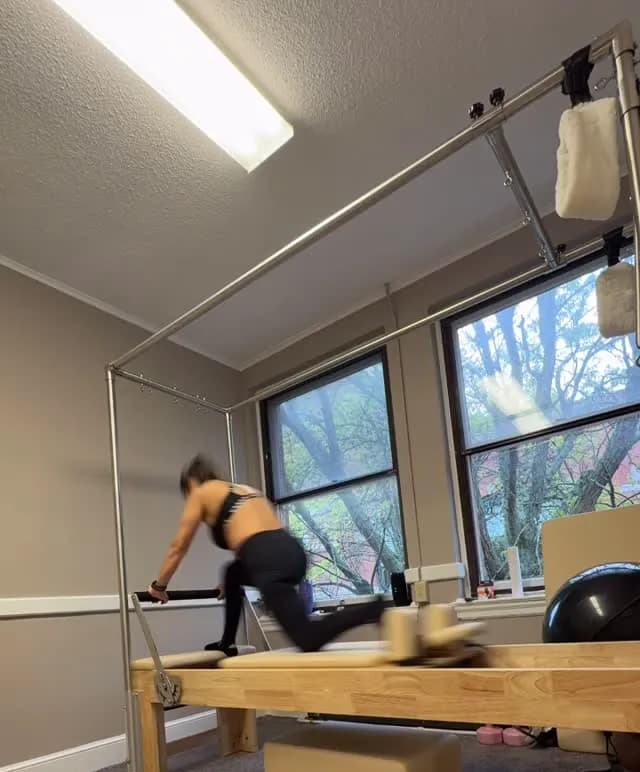
Hips and glutes. Strong hips help with lifting, carrying a car seat and getting up from the floor. Supported leg work on the Reformer builds this strength with low impact.
What to be careful with
In the early months, many instructors limit exercises that create a lot of pressure on the abdominal wall, like full roll ups, double leg lifts and crunch style moves, especially if there is any separation of the abdominal muscles. These can come back gradually as strength returns.
Watch for doming or bulging along the midline of the belly, leaking, heaviness in the pelvis or pain. If any of these appear, stop, tell your instructor and check in with your healthcare provider.
Sleep loss is real. On days when you are exhausted, a lighter session with more breathing and mobility can be the right choice. Postnatal recovery is not a race.
Why private sessions suit new mothers
A postnatal body changes from week to week, and what felt fine last Tuesday might not today. Private Pilates lets your instructor adjust everything in real time: the springs, the range of movement and the exercises themselves. If something does not feel right, you change it immediately.
Private sessions are also booked by appointment, which helps when your schedule revolves around feeding and naps. At our studios, sessions start as early as 7am on Tuesday, Thursday and Saturday, and run until 8pm on weekdays.
The apparatus helps too. The Reformer and the Cadillac can support the body while you rebuild strength, so you can work with less strain. Later, when you feel ready, our small Mat Pilates classes, limited to five people, can add variety.
A realistic timeline
Every recovery is different, but a gentle progression often looks like this. In the first phase after clearance, sessions focus on breathing, posture and gentle core and pelvic floor connection. As weeks pass and strength returns, the instructor adds more leg work, upper body strength and spinal mobility. Later, more challenging abdominal work and full classical exercises come back, as long as your body responds well.
Many women find that consistency matters more than intensity. One or two sessions a week, plus short breathing and posture exercises at home, can make a real difference in how you feel. Our guide on how often to do Pilates has more on finding your rhythm.
Caring for the rest of you
Rest, hydration, sleep when you can, and support from the people around you matter as much as any exercise. Tell your instructor about your delivery and any medical guidance you have received, so each session respects where you are.
Above all, be patient with yourself. Feeling strong again is a process, and gentle, regular movement is a good way to support it.
Postnatal Pilates in Lowell and Chelmsford
We teach private and duet sessions at our studio in downtown Lowell and at our Chelmsford studio. When you reach out, tell us how long it has been since your birth, what kind of delivery you had and what your provider has said about exercise. We will plan your first session around that.
A trial class is $30. Everything about booking is on our new clients page.
Frequently asked questions
- How soon after birth can I do Pilates?
- It depends on your delivery and recovery. Many providers check in around six weeks after birth, and recovery after a cesarean often takes longer. Always wait for your doctor or midwife to clear you for exercise.
- Can Pilates help with diastasis recti?
- Some women find gentle, well guided core work helpful as part of recovery, but results vary. Ask your provider, and consider a pelvic floor physical therapist for assessment. Tell your instructor about any abdominal separation.
- Is reformer Pilates okay after pregnancy?
- Once you are cleared for exercise, many women enjoy the Reformer because the springs can support the body. Your instructor should adapt each exercise to your recovery.
- Can I do Pilates after a C-section?
- Many women return to Pilates after a cesarean birth, usually later than after a vaginal birth and only once their surgeon or doctor clears them. Start gently and share your provider’s guidance with your instructor.
Found this helpful? Make us a preferred source on Google.
Ready to book your session?
Private, duet and mat Pilates by appointment in Lowell and Chelmsford, MA. We reply personally.